
Heat pumps
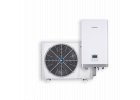
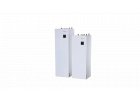
Heat pumps move low-grade heat from the outdoor air into a water-based heating and hot water system, delivering roughly three to four times more heat energy than the electricity they consume. Choose by heat output matched to the building's calculated heat loss, by design flow temperature, and by how domestic hot water is handled: Split Arctic uses an indoor hydraulic module with a buffer tank, while Split Arctic with integrated DHW tank puts the cylinder inside the indoor unit. Air-to-water units from Kaisai, 6 to 16 kW, pair naturally with photovoltaics. Guide
Heat pumps are a modern and environmentally friendly solution for heating and hot water preparation. They use renewable energy from the surroundings (air, ground or water) which they convert into heat for your home or business. The benefit is not only energy cost savings, but also a reduction in your carbon footprint.
Choose heat pumps by brand

Product sorting
List of products


Listing controls
Related heating categories
- Split Arctic
- Split Arctic with integrated DHW tank
- Kaisai heat pumps
- Photovoltaics
- Hybrid inverters
- Smart meters
Air-to-water heat pumps: output, flow temperature and system layout
An air-to-water heat pump runs a refrigerant cycle between an outdoor unit, which evaporates refrigerant using ambient air, and a condenser that transfers the heat into the heating water. What separates one unit from another is rated heat output in kW at a stated test point, the design flow temperature it can reach efficiently, its SCOP, the refrigerant it uses (typically R32 or R290), and whether the hydraulic side is a monobloc or a split. Those five values decide the running cost far more than the badge on the casing.
This category covers Kaisai units from the Arctic series, an inverter-driven split range built for cold-climate operation in heat outputs from 6 to 16 kW. Choose Split Arctic where hot water is already handled by an existing cylinder, and Split Arctic with integrated DHW tank where a single indoor unit with a built-in 190 L or 240 L cylinder saves plant room space and pipework.
FROM THE FIELD
"Almost every underperforming installation I am called to was sized from floor area rather than from a heat loss calculation. Oversizing does not fail loudly, it just short cycles: the compressor starts, satisfies a small buffer in four minutes, stops, and repeats. The seasonal efficiency you actually get is set by your flow temperature, not by the datasheet COP, so drop the curve to 40 °C or below before you decide you need a bigger machine."
Ladislav Proc · Heat pump specialist, ONSA Plus
How to choose an air-to-water heat pump
A heat pump is not a boiler swap. It is a low-temperature appliance dropped into a distribution system that was usually designed for high temperature, so the emitters, the hydraulics and the control strategy decide whether the installation is cheap or expensive to run.
Work through it in this order: heat loss of the building at the local design outdoor temperature, then the flow temperature your radiators or underfloor circuits actually need, then the output at that flow temperature and at the design outdoor temperature, and only then the practical questions of hot water volume, phases, siting and noise.
Show the full guide Close the guide
Size against heat loss, not floor area
Floor area rules of thumb ignore the two things that matter most: insulation level and air tightness. A room-by-room heat loss calculation to EN 12831 gives the design heat load in kW at your local design outdoor temperature, and that number, plus an allowance for hot water reheat, is what the heat pump must cover.
- Use the design point, not the nominal rating. A unit rated at 12 kW at 7 °C outdoor and 35 °C flow may deliver considerably less at minus 10 °C outdoor and 50 °C flow. Read the capacity tables, not the model name.
- Do not add a safety margin on top of a margin. Heat loss calculations already assume steady-state worst case. Adding 30 % on top produces a unit that spends most of the season below its minimum modulation.
- Check the minimum modulated output. An inverter unit that turns down to 30 % of rating behaves far better in a mild autumn than one that only turns down to 60 %.
- Count the hot water load separately. A 190 L or 240 L cylinder reheat is a short high-demand event, usually handled by scheduling rather than by extra rated output.
Flow temperature is the main efficiency lever
Every degree of flow temperature costs efficiency. As a working rule, each 1 °C reduction in flow temperature improves COP by roughly 2 to 2.5 %, so the same machine on the same house can swing between poor and excellent depending on how the emitters are set up.
- Underfloor heating runs at 30 to 40 °C flow because the emitting surface is enormous. This is the natural pairing and gives the highest seasonal efficiency.
- Oversized or replaced radiators can run at 40 to 45 °C. Doubling radiator surface area in the two or three worst rooms is usually cheaper than accepting a 55 °C system for twenty years.
- Existing radiators sized for a gas boiler at 65 to 70 °C will work, but the COP penalty is severe and the unit may need its high-temperature envelope for only a handful of days a year.
- Weather compensation should always be enabled. A fixed flow setpoint wastes the whole benefit of a modulating compressor.
COP, SCOP and what the numbers mean
COP (coefficient of performance) is heat output divided by electrical input at one stated operating point, for example A7/W35, meaning 7 °C outdoor air and 35 °C flow. SCOP is the seasonal average over a defined climate profile and a defined flow temperature, calculated to EN 14825. SCOP is the honest figure for comparing running cost because it includes part-load operation, defrost cycles and standby.
- Always compare like for like. A SCOP quoted at 35 °C flow and one quoted at 55 °C flow are not comparable numbers.
- Defrost matters. Between roughly minus 5 °C and plus 5 °C with high humidity, the outdoor coil ices up and the unit periodically reverses to melt it. Frequent defrosts pull the seasonal figure down.
- SPF is what you actually get. The seasonal performance factor measured on site includes pumps, controls and any backup heater, so it sits below the brochure SCOP.
Tip from practice
Before commissioning, check the minimum system water volume and the flow rate through the unit. Most short-cycling complaints come from a system with too little volume and too many thermostatic valves closing at once. A correctly sized buffer or a low-loss header, plus leaving at least one circuit permanently open, solves more problems than any control setting.
Monobloc or split, R32 or R290
In a monobloc, the entire refrigerant circuit is sealed inside the outdoor unit and only water pipes enter the building, so no F-gas handling is required on site but the external pipework must be protected against freezing. In a split, the compressor sits outdoors and the condenser indoors, connected by refrigerant lines, which removes the freezing risk and generally lowers outdoor noise, but requires a certified refrigerant handling engineer to commission.
- R32 is the current mainstream refrigerant, with a GWP of 675, mildly flammable in class A2L and well supported across the supply chain.
- R290 (propane) has a GWP of 3 and reaches higher flow temperatures efficiently, but it is class A3 flammable, which imposes stricter siting distances from windows, doors and drains.
- Charge size and siting rules follow EN 378 and the F-gas regulation. Confirm minimum room volume and clearances before the outdoor unit position is fixed.
Bivalent point and backup heater
The bivalent point is the outdoor temperature at which the heat pump alone can no longer cover the building's heat loss. Above it the compressor does everything, below it a second heat source contributes. In a monoenergetic system that second source is an electric backup heater, typically 3 to 9 kW in the indoor unit. Choosing a bivalent point around minus 7 °C to minus 10 °C lets a correctly sized unit cover the vast majority of the annual heat demand, with the element supplying only a small percentage of it.
- Watch how often the element runs. A backup heater that engages regularly in November means the sizing or the flow temperature is wrong, not that the unit is faulty.
- Legionella cycles need it. Most systems use the immersion element to lift the cylinder above 60 °C periodically, which is normal and short.
- Check the electrical connection. Units up to about 10 kW are often single phase at 230 V, larger units and most backup elements need a three-phase 400 V supply and an appropriately rated breaker and RCD.
Combining a heat pump with photovoltaics
A heat pump is the single best self-consumption load a household has, because it converts each kWh of surplus solar into three or four kWh of heat. The practical route is a photovoltaic array with an export-aware controller: a smart meter at the connection point detects surplus, and the system raises the hot water setpoint or lifts the heating curve slightly while the sun is on the roof.
- Store heat, not just electricity. Lifting a DHW cylinder from 45 to 55 °C absorbs several kWh of surplus at a fraction of the cost of battery capacity.
- Seasonal mismatch is real. Peak heat demand is in January, peak PV yield is in June, so a heat pump improves self-consumption strongly in spring and autumn and much less in midwinter.
- Watch the starting current. Inverter compressors have a soft start, but the backup element is a blunt resistive load and should be interlocked so it does not fight the PV control logic.
Noise and outdoor unit siting
The outdoor unit is the only part neighbours notice. Sound power level in dB(A) appears on the datasheet, but what matters legally is sound pressure at the boundary, which falls with distance and rises with reflective surfaces. Keep the unit off a corner between two walls, avoid pointing the fan at a neighbouring window, leave the manufacturer's clearance for airflow, and mount it on anti-vibration feet on a rigid base rather than directly on a house wall. A night quiet mode reduces fan speed and compressor frequency at the cost of a little capacity.
Key parameters compared
| Parameter | What to compare | What it affects |
|---|---|---|
| Heat output | kW at A7/W35 and at the design outdoor temperature | Whether the building stays warm on the coldest days |
| SCOP | Seasonal figure at 35 °C and at 55 °C flow | Annual running cost, far more than peak COP |
| Flow temperature | Maximum flow and the temperature your emitters need | Efficiency, radiator sizing, comfort in cold spells |
| System type | Monobloc or split, R32 or R290 | Installation route, freezing risk, siting clearances |
| Hot water | Separate cylinder or integrated 190 L or 240 L tank | Plant room space, pipework, simultaneous draw-off |
| Electrical and acoustic | Single phase or three phase, sound power in dB(A) | Supply upgrade, breaker sizing, siting near boundaries |
Swipe the table to the left
Frequently asked questions about heat pumps
How do I size a heat pump for my house?
Size it from a room-by-room heat loss calculation at your local design outdoor temperature, not from floor area. Then check the manufacturer's capacity table at that outdoor temperature and at your actual flow temperature. Add the hot water reheat load only if it cannot be scheduled outside peak heating hours.
What is the difference between COP and SCOP?
COP is efficiency at one stated operating point, such as A7/W35. SCOP is the seasonal average over a whole heating season under EN 14825, including part load, defrost cycles and standby. SCOP is the figure to compare when estimating running cost, provided both units are quoted at the same flow temperature.
Can I run a heat pump on my existing radiators?
Usually yes, but efficiency depends on the flow temperature they need. Radiators sized for a 70 °C gas boiler will force a high flow temperature and a poor SCOP. Enlarging radiators in the two or three worst rooms so the system runs at 45 °C or below is normally the cheapest fix.
Monobloc or split: which should I choose?
A monobloc keeps the whole refrigerant circuit outdoors, so no on-site F-gas work is needed, but the water pipes outside must be protected against freezing. A split puts the condenser indoors with refrigerant lines between the units, avoiding freezing risk and often reducing outdoor noise, but commissioning requires a certified refrigerant engineer.
Do I need the version with an integrated DHW tank?
Choose the integrated version when you want one indoor unit containing the hydraulics and a 190 L or 240 L cylinder, saving space and pipework. Choose Split Arctic when a suitable cylinder already exists or when the hot water demand needs a larger dedicated tank.
What is a bivalent point and do I need a backup heater?
The bivalent point is the outdoor temperature below which the heat pump alone cannot cover the heat loss, and a backup electric element makes up the difference. Set around minus 7 °C to minus 10 °C, the element supplies only a small share of annual heat. Frequent use in mild weather signals a sizing or flow temperature problem.
Is R290 better than R32?
R290 (propane) has a global warming potential of 3 against 675 for R32 and reaches high flow temperatures more efficiently, which suits radiator retrofits. Its drawback is A3 flammability, which imposes stricter siting clearances from windows, doors and drains. R32 remains the mainstream, better supported option.
How much noise does the outdoor unit make?
Datasheets state sound power in dB(A), but the figure that matters is sound pressure at the property boundary, which drops with distance and rises near reflective corners. Mount the unit on anti-vibration feet on a rigid base, keep the fan away from neighbouring windows, and use night quiet mode where available.
Does a heat pump work well with photovoltaics?
Yes, it is one of the strongest self-consumption loads because each surplus kWh becomes three or four kWh of heat. A photovoltaic array with export detection can raise the hot water setpoint on sunny days. The benefit is largest in spring and autumn, smallest in midwinter.
Single phase or three phase: what do I need?
Units up to roughly 10 kW are commonly available as single phase at 230 V. Larger units, and most 6 to 9 kW electric backup elements, require a three-phase 400 V supply for balanced loading. Confirm the available connection capacity and breaker rating at the distribution board before ordering.
Heat pump sizing, the bivalent point and the achievable seasonal efficiency depend on a heat loss calculation for the specific building and on the design flow temperature of the emitters.
About ONSA Plus
Why installers across Europe buy heat pumps from us
ONSA Plus is a European B2B distributor of photovoltaics, battery storage, heat pumps and EV charging stations. In our own EU warehouses we keep over 1,500 products from 25+ brands, including Huawei, Solis, SolaX and Dyness.
We are not just a trading company. We design and service energy systems ourselves, so we answer questions on heat pump sizing, flow temperatures and photovoltaic pairing from engineering practice, not from a catalogue. You handle a warranty claim directly with us and you buy per job.


